

April 2026: Nationwide Recall of 3.1 Million Eye Drops; Levothyroxine Recall; Clindomycin, Alli Warnings; New Cholesterol Screening Guidelines; Thyroid Medications Regulation
KC Pharma Recalls Over 3 Million Bottles of Store Brand Eye Drops
KC Pharmaceutical, a Pomona, California-based manufacturer and major supplier of private label eye products, has recalled 3.1 million bottles of eye drops nationwide because of sterility concerns. This could be due to a problem with sterile aseptic equipment or a lapse in sterile conditions at the KC manufacturing facility: the exact reason is not provided in the FDA Enforcement Report. KC Pharmaceutical’s manufacturing facility was been cited for sterility violations in the past and received a warning letter in 2023.
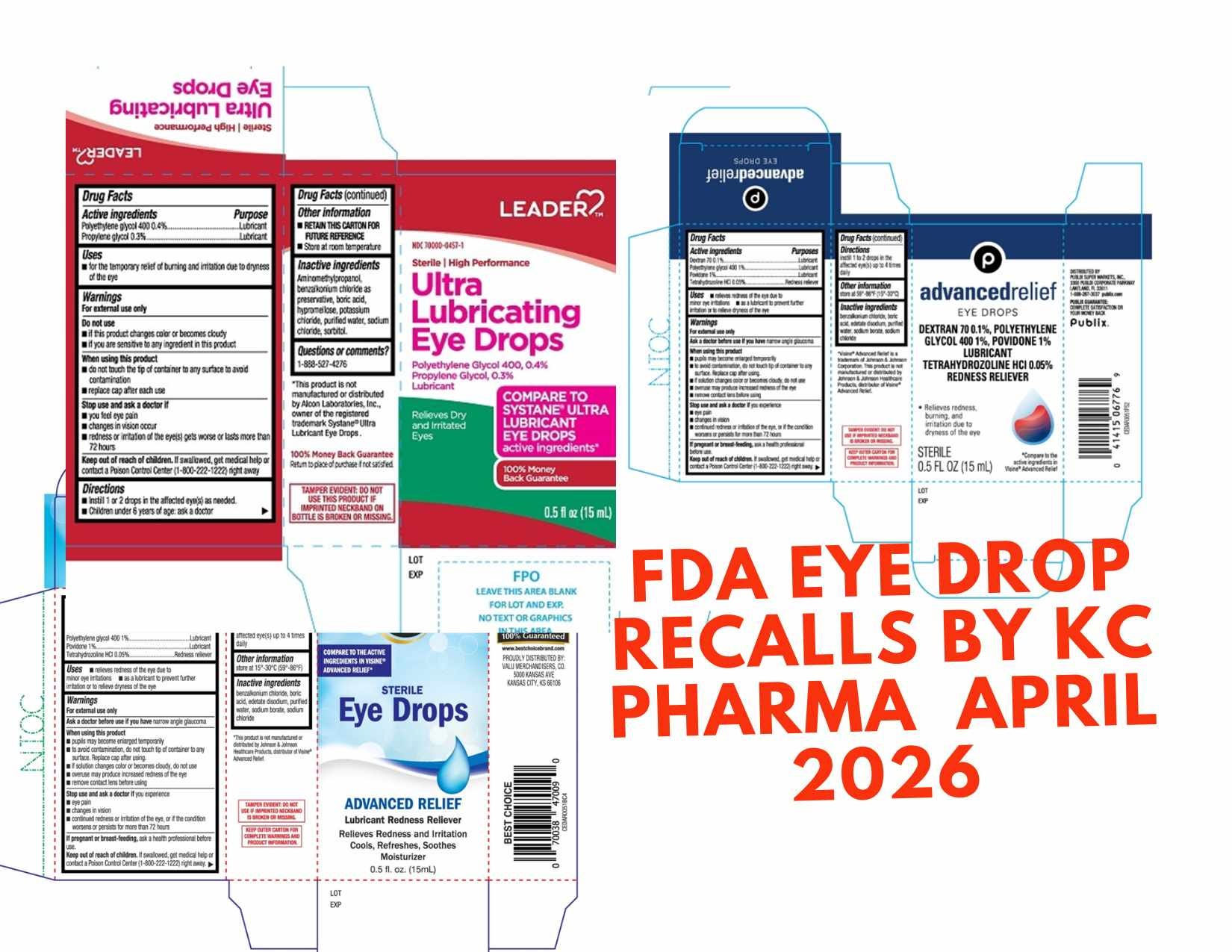
Over-the-counter eye drops with labels under the names of Kroger, Harris Teeter, H-E-B, Publix, Meijer, CVS, Rite Aid, Walgreens, Dollar General, Cardinal Health, Goodsense, Foster and Thrive, Leader, and others are included in the recall.
The FDA reports that eight separate products (all are .5 fluid ounce or 15 mL container) are under recall with the following names, ingredients, and quantities:
Artificial Tears Sterile Lubricant Eye Drops (polyvinyl alcohol 0.5%, povidone 0.6): 589,000 bottles
Dry Eye Relief Eye Drops, (glycerin 0.2%, hypromellose 0.2% and polyethylene glycol 400 1%): 1,023,096 bottles
Eye Drops Advanced Relief, (dextran 70 0.1%, polyethylene glycol 400 1% and tetrahydrozoline HCl 0.05%): 303,216 bottles
Sterile Eye Drops AC (tetrahydrozoline HCl 0.05%, zinc sulfate 0.25%): 182,424 bottles
Sterile Eye Drops Original Formula (tetrahydrozoline HCl 0.05%): 378,144 bottles
Sterile Eye Drops Redness Lubricant (glycerin 0.25% and naphazoline HCl 0.012%): 315,144 bottles
Sterile Eye Drops Soothing Tears (polyethylene glycol 400 0.4% and propylene glycol 0.30): 74,000 bottles
Ultra Lubricating Eye Drops (polyethylene 400 0.4%, propylene glycol 0.3%): 245,184 bottles
All of the affected products under recall have expiration dates in 2026 and are branded with various retail stores or private label brand names. This recall is directed at retail suppliers, but you may check the recall report for lot numbers to find out if your eye drops are included in the recall.
FDA Recall Enforcement Report
Bromfenac Eye Drops Recall by Alembic
Alembic Pharma is recalling Bromfenac ophthalmic solution 0.07, prescription eye drops for postoperative inflammation and eye pain in patients who have undergone cataract surgery. The recall is due to “failed Impurities/Degradation Specifications” when tested at 20 months. The product was manufactured in Gujarat, India. All of the affected lots expired in March 2026 except lot # 7240278, which expires in May 2026.
FDA Recall Enforcement Report
Levothyroxine Sodium Tablets Recall by Macleods
Macleods Pharma USA is recalling 1,315 bottles of 150 mcg Levothyroxine Sodium Tablets (1000-count) because the tablets may be subpotent, or contain less than the specified amount of the active ingredient. Levothyroxine treats hypothyroidism (underactive thyroid). The recalled medicine was made by Macleods in Valsad, Gujarat, India. The lot number of the affected product is 16240062A with an expiration date of March 2026.
FDA Recall Enforcement Report
Thyroid Medications Regulation: Alternative Medicines for Hypothyroidism
While most people with hypothyroidism (underactive thyroid) and Hashimoto’s (a thyroid-specific autoimmune disease) are fine taking the synthetic version of levothyroxine, (either a generic or Synthroid brand name), some patients only find symptom relief from natural versions of the thyroid hormone, called “desiccated thyroid” (dried porcine thyroid gland). For these patients, the naturally derived medication more closely mimics thyroid gland hormones.
Last August, the FDA sent warning letters to companies marketing naturally-derived thyroid hormone (such as Armour Thyroid or NP Thyroid) stating that the medications were not FDA approved and that the FDA would require approval within a year. To the relief of many patients and the drug makers, on March 18, 2026 the FDA updated its position to allow continued sale of the drugs while they work out the details of assuring product quality and safety by moving towards FDA approval of the products.
Natural thyroid options include Armour Thyroid and NP Thyroid. Also, several compounding pharmacies recommended by Mary Shoman’s website prepare natural thyroid medicines tailored to your requirements, including options for patients who used Nature-Thyroid or WP Thyroid brands, which are no longer available and use different active ingredients than Armour Thyroid or NP Thyroid.
Updated FDA Announcement from March 2026: FDA’s Actions to Address Unapproved Thyroid Medications

Read more about hypothyroidism at Medline Plus
New Warnings for Cleocin (Clindamycin Phosphate and Clindamycin HCL)
Cleocin (clindamycin), a common antibiotic, has a new warning about heart problems that can occur as part of an allergic reaction to the drug. The label now warns that acute myocardial ischemia (reduced blood flow to the heart) has been reported with or without myocardial infarction (heart attack) as part of an allergic reaction. Cleocin was originally approved in 1970.
Safety Updates: Cleocin HCL FDA Safety Label Update and Cleocin Phosphate FDA Safety Label Update
Kidney Injury Warning for Alli (Orlistat) Capsules
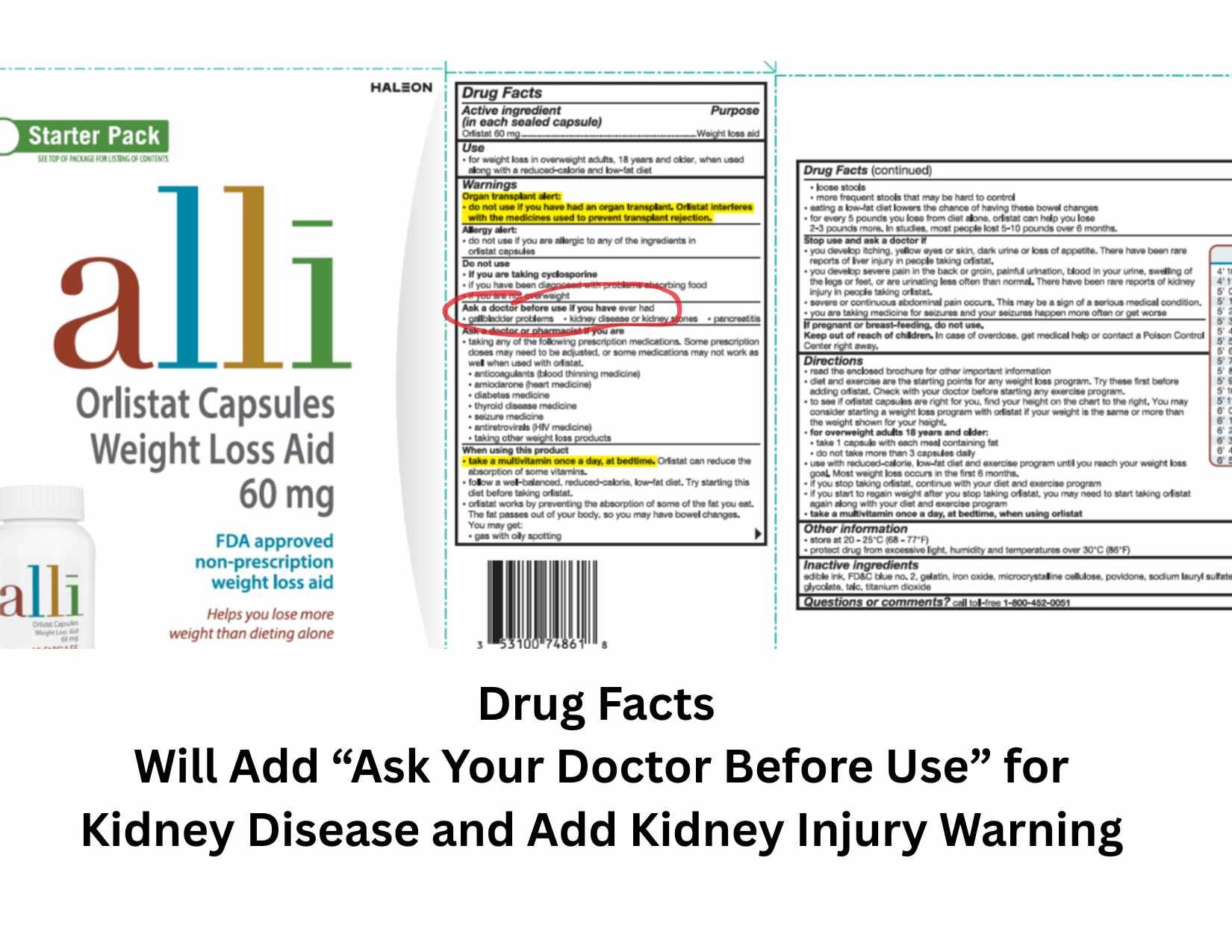
At the request of the FDA, over-the-counter weight loss drug Alli (orlistat) is adding warnings about the risk of kidney injury to the “Drug Facts” section on the packaging. Patients who have (or had) kidney disease are instructed to “Ask a Doctor Before Use.” Patients are warned to stop using the medication if they experience symptoms of kidney injury including pain in the back or groin, painful urination, blood in urine, swelling of the legs or feet, or are urinating less often than normal. Because Orlistat works by preventing the absorption of fat, it may reduce the absorption of vitamins from food. Patients are advised to take a multivitamin supplement and to eat a well-balanced, low fat diet.
Xenical (orlistat 120 mg) and generic orlistat is a prescription medication for weight loss, approved in 1999. Xenical already includes a warning about the risks of kidney disease. Alli was approved as an over-the-counter lower dose orlistat version (60 mg) in 2007.
Alli FDA Safety Label Update
Health Tips: New Cholesterol Guidelines: Have you had your Lipoprotein(a) Levels Checked?
The American College of Cardiology (ACC), the American Heart Association (AHA), and nine other medical associations recently updated the 2018 cholesterol management guidelines (“2018 AHA/ACC Guideline on the Management of Blood Cholesterol”), with the “2026 Guideline on the Management of Dyslipidemia.”
The new guidelines emphasize earlier screening, more types of screening tests, healthy lifestyle, monitoring blood pressure, and selective use of medications to lower the risk of atherosclerotic cardiovascular disease (ASCVD), which can lead to heart attacks and strokes. Here are some highlights:
Lipoprotein a test
The new guidelines say that everyone should be tested for Lp(a) at least once in their lifetime. Lipoprotein(a) is an inherited type of LDL that accelerates plaque formation, promotes inflammation, and makes blood more likely to clot. Patients with Lp(a) levels at or above 125 nmol/L (50 mg/dL) have a 1.4-fold increased risk of ASCVD, and the risk doubles at values at or above 250 nmol/L (100 mg/dL) and quadruples at values at or above 430 nmol/L (180 mg/dL).
Repeating the test usually isn’t needed because results tend to be stable over time. Because Lp(a)-lowering treatments aren’t available, patients with elevated levels may be advised to consider taking LDL-C (bad cholesterol) lowering treatments and try to minimize their other heart disease risk factors.
Coronary Artery Calcium (CAC) CT scans
CAC scans are recommended in men 40 years or older and in women 45 years and older with borderline or intermediate 10-year risk of heart attack or stroke if knowing CAC will help with the decision to prescribe a statin or not.
Medications Guidance and Risk Calculator
New guidelines say you should take statins if you are age 40 to 75 years old with diabetes, have stage 3 or 4 kidney disease, or have human immunodeficiency virus (HIV), even if you have normal LDL levels. Otherwise, it depends on your LDL levels and your other risk factors. According to the new guidelines, to prevent a first heart attack or stroke, the LDL-C goal should be less than 100 mg/dL for those at borderline or intermediate risk and less than 70 mg/dL in those at high risk. For individuals with ASCVD who are at very high risk, the LDL-C goal should be less than 55 mg/dL for secondary prevention of cardiac events.
The guidelines recommend the use of a new cardiovascular disease risk calculator (the American Heart Association’s PREVENT-ASCVD calculator) to compute risk scores, but using the scores to make treatment decisions is controversial because there are many factors not taken into account in the calculation that can affect an individual’s risk.
American Heart Association: “What Your Cholesterol Levels Mean” and Press Release on the New Guidelines
Dr. Lucy McBride and Cardiologist Dr. Greg Katz talked about the new cholesterol guidelines in a recent podcast: “What the New Cholesterol Guidelines Mean for You: A Conversation with NYU Cardiologist Dr. Greg Katz”
“Together, they cut through the noise on coronary artery calcium scores, Lp(a), statins, GLP-1s, and the lifestyle factors that matter most for heart health. The upshot: we treat people, not numbers.”
When is a Statin Needed?
Dr. Lucy McBride, writer of “Are You Okay?” recently answered a reader-submitted question about statins and cholesterol levels:
A 42-year old reader has normal cholesterol except for an LDL of 135. She feels fine and eats a fairly healthy diet but is concerned because her doctor wants her to take a statin. Does she really need to take one?
Question and Answer - do I need to take a statin
Did you miss our last edition? Check it out here:


This infuriates me! What form of quality control do these drug companies have and how dare they release medication on the market that could lead to harmful outcomes for the patients who rely on them? It’s bad enough that everything else is poisoned! They really are determined to destroy everything!
What happened to the Hippocratic oath Doctors and Nurses took?
I guess the majority have been paid to look the other way.
How sad for the survival of mankind!