

May 2026 Part 2: 100+ Cases of Supplement-Linked Salmonella in 36 States; Ramipril Warning; Tums, Erythromycin, Nicotine Patch Recall; Insulin Inhaler for Kids; Psychotherapy Caution
Supplements Causing Nationwide Salmonella Outbreak; Moringa Leaf Capsules Recalled
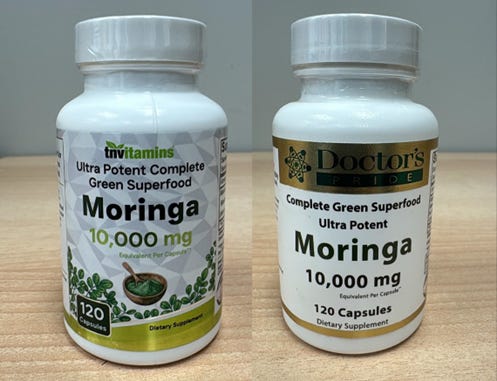
Total Nutrition Inc. is recalling TNVitamins Ultra Potent Complete Green Superfood capsules and Doctor’s Pride Complete Green Superfood Ultra Potent Moringa Capsules (120 count) because the products may be contaminated with Salmonella, an organism which can cause serious illness or even fatal infections in the elderly, young children, or those with compromised immune systems. The recalled products were distributed nationwide through the online platforms, Amazon, Walmart, TikTok Shop, Target, and the company’s websites.
People infected with Salmonella often experience fever, diarrhea (which may be bloody), nausea, vomiting and abdominal pain. Symptoms usually start 6 hours to 6 days after infection and usually last 4 to 7 days. So far, 119 people have become sick with salmonella poisoning and the CDC and FDA are investigating whether additional products are involved. This is the second moringa leaf-related salmonella outbreak so far this year.
FDA Press Release: FDA Recall of Total Nutrition Supplements / Morginga "Complete Green Superfood" Capsules
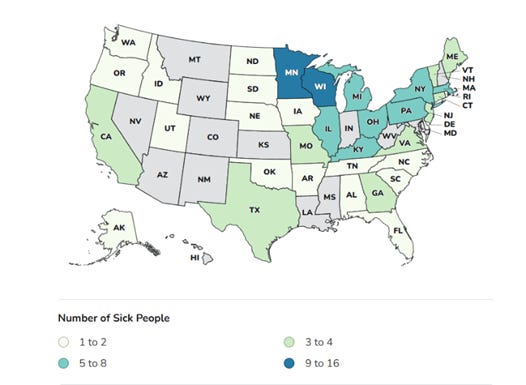
Summary of case counts (from CDC):
Total Illnesses: 119 (22 new)
Hospitalizations: 32 (6 new)
Deaths: 0
Last Illness Onset: April 26, 2026
States with Cases: AK, AL, AR, CA, CT, DE, FL, GA, IA, ID, IL, KY, MA, ME, MI, MN, MO, NC, ND, NE, NJ, NY, OH, OK, OR, PA, RI, SC, SD, TN, TX, UT, VA, VT, WA, WI
Related Recalls: Superfoods, Inc. Recall, Why Not Natural Recall
Recall of Erythromycin by Zydus
Zydus Pharmaceuticals is recalling almost 35,000 bottles (30 and 100-count) of 250 mg and 500 mg of antibiotic erythromycin tablets due to presence of nitrosamine above the allowed limits. The tablets were manufactured by Zydus Lifesciences Ltd. In Ahmedabad, India. Nitrosamine in medications may increase the risk of cancer. The recall is directed at suppliers, but consumers may check the enforcement report for lot numbers or check with their pharmacy to find out if their medication was affected by the recall. The tablets expire in August 2026 or January 2027.
FDA Enforcement Report
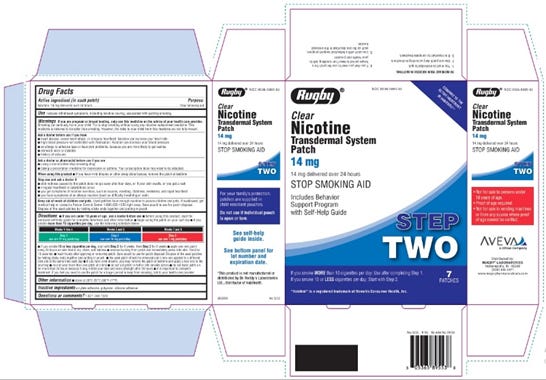
Rugby Nicotine Patches by Avea
Aveva Drug Delivery Systems is recalling 59,808 Rugby Nicotine Transdermal System Patches (4,272 individual 14-count cartons), 14 mg, Aveva due to elevated levels of oxidative impurities, which could affect the product’s shelf life. Lot #: 56841, Expires: 03/2028. The 14 mg strength is the “step 2” of the 3 part quit-smoking system. The product was distributed by Rugby Laboratories (now known as Major-Rugby) in Indianapolis.
FDA Enforcement Report
Tums Ultra Assorted Fruit Chewable Recall
CVS is recalling two lots of Tums Ultra Assorted Fruit Chewable Tablet 1000 mg in 160-count bottles. Lot numbers are 1096078 and 1096078 with expiration dates of 31 JAN 2029 due to potential contamination with small metal pieces. Customers who purchased recalled product should stop using it and may obtain full refund by returning product to CVS. This recall has so far not been posted on the FDA website. Check link for product image.
CVS Tums Recall
New Approval: Inhaled Insulin for Children with Diabetes
The FDA expanded the approval for Mannkind’s Afrezza (insulin inhalation powder), for children age 6 and older with diabetes (Type 1 or Type 2). It is the first needle-free insulin treatment option available for children. CBS News Philadelphia interviewed fifteen-year-old Greg Stanoch from Chadds Ford Pennsylvania, who was diagnosed with Type 1 diabetes in first grade. Greg participated in the clinical trial and used Afrezza for four years before it was approved for kids. Afrezza has a boxed warning about the risk of bronchospasms in people with asthma, COPD, lung disease. It should also not be used by those who smoke or recently quit smoking. The inhaler is used at the beginning of each meal. It was originally approved in 2014.
CBS News Philadelphia: “FDA Approves Needle-Free Insulin for Children”
Company press release: Mannkind Corp Press Release
Have an experience (good or bad) with AFREZZA? Rate AFREZZA at Ask a Patient.
GLP-1 News: Medicare to Cover GLP-1 for Weight Loss for $50 copay
According to a poll conducted by KFF, one in eight American adults is currently taking a GLP-1 medication. Many Medicare beneficiaries have not had access to them as a weight loss drug because of Medicare Part D exclusions of coverage for weight loss. Starting in July 2026, Medicare is launching the GLP-1 Bridge Program, which will, for the first time, allow beneficiaries to access GLP-1 medications prescribed specifically for weight loss in a pilot program that will run from July 1, 2026 through December 31, 2027. The program covers all formulations of Wegovy and Foundayo, plus the KwikPen formulation of Zepbound at a flat $50 copay.
Checkbook.org: Medicare and the New GLP Bridge Program: What Beneficiaries Need to Know Before it Launches this Summer
GLP-1 Drugs and Cancer Progression
A poster presentation will be presented at this week’s American Society of Clinical Oncology (ASCO) annual meeting. Researchers from Cleveland Clinic looked at patient data sourced from the TriNetX Global Health Research Network for over 10,000 patients with seven different types of solid tumors. The research found that patients with breast, liver, colorectal and lung tumors who began taking GLP-1 receptor agonist drugs after their cancer diagnosis had a lower risk of their cancer progressing, compared with patients taking a different type of medication used to treat diabetes called DPP-4 inhibitors or gliptins. Examples of gliptins include itagliptin (Januvia) Linagliptin (Tradjenta) Saxagliptin (Onglyza).
However, the other three types of tumors: prostate, pancreatic, and kidney did not have statistically significant lower risk of cancer progression. The press release contains the risk level reductions, which were as much as 50% for some cancer types.
ASCO Press Release: GLP-1s May Reduce Metastatic Progression of Certain Obesity-Related Cancers
Research Abstract
Auvelity: New Side Effects
Axsome Therapeutic’s Auvelity (dextromethorphan hydrobromide and bupropion hydrochloride) extended-release tablets recently received expanded approval to treat agitation associated with dementia due to Alzheimer’s disease. A newly discovered side effect for Auvelity that is more likely to happen in the elderly is hyponatremia, or low levels of salt in the blood. Symptoms of hyponatremia include headache, difficulty concentrating, memory changes, confusion, weakness and unsteadiness on your feet. Severe cases may include hallucinations, fainting, seizures and coma. If not treated, severe low sodium levels can cause death. Postmarketing reports of feeling abnormal, tinnitus, and tremor were also added in this label update. Auvelity was originally approved in 2022 to treat major depression in adults.
Safety-Related Label Change for Auvelity.
Ramipril and Severe Delayed Hypersensitivity Reaction
The ACE inhibitor-type blood pressure drug Ramipril (formerly Altace brand name, which has been discontinued) has an updated warning about the potentially life-threatening risk of angioedema. Angioedema is a sudden swelling in the tissue beneath the skin, most commonly affecting areas like the lips, eyelids, and throat. Ramipril’s label now states that angioedema can happen at any time, even months or years after starting treatment. The onset of ACE inhibitor-induced angioedema is more likely to happen after the first dose or in the first weeks of treatment. Patients with symptoms of angioedema should discontinue the medication immediately and consult a healthcare provider. Ramipril was approved in 1991 as the Altace brand and is available as a generic capsule medication.
Altace (ramipril) Safety Labeling Change
Read more about angiotensin converting enzyme (ACE) inhibitor-induced angioedema at Dermnetz
Rx-OTC Switch Poll Results
The FDA is considering making it easier to switch drugs from prescription-only to over-the-counter status. In an informal poll on our website, we asked readers whether they agreed with the move, and more than 80% did. Drugs suggested as good candidates to move over-the-counter include albuterol for asthma, antivirals, statins, Epi-Pen for allergic reactions, and rosuvastatin for high cholesterol.
Ask a Patient News: Converting More Rx to OTC
Generic Drug Quality and Safety
Contaminated products and failed facility inspections leading to recalls and production halts have put a spotlight on generic drug safety. Concern about generic drugs not working the way they should is also a problem: a recent survey by MedShadow Foundation/Kantar found that one in three Americans say their generics don’t always work the same.
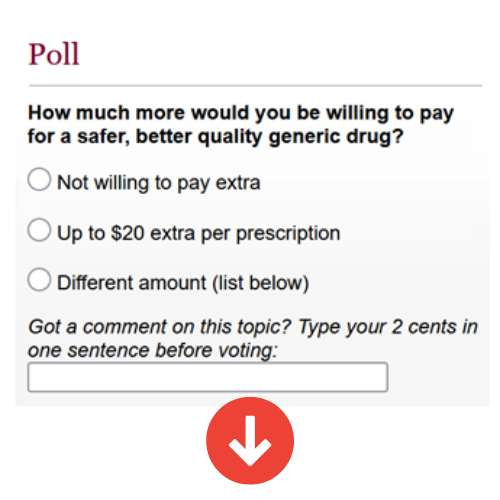
On the Ask a Patient site, some patients complain about generic formulations changing or that they have to insist on receiving (and paying a much higher price) for a brand name version because the generics don’t work the same. Could it be that the generics are just too cheaply produced, making it impossible to get a quality pill for the amount being spent on production? The MedShadow/Kantar survey revealed that many Americans would pay more, sometimes a lot more, for a better quality generic drug. Would you? Here’s our quick, informal poll on the topic (click the caption below to answer the poll):
Specific generic drugs flagged by readers at Ask a Patient as not working as expected include: Ritalin (Methylphenidate), Norco (Amneal version of acetaminophen/hydrocodone), Vivelle dot generic (contraceptive patch), Microgestin (oral contraceptive problems with Mylan version), Aciphex (Proton pump inhibitor used for GERD or ulcers – problem with Mylan version of rabeprazole), and others.
Proposals to Improve Generic Drug Quality
In a recent New England Journal of Medicine paper, two health experts caution that although the U.S. has saved trillions on generic drug costs since 1984 (when the current generic drug approval process was established), the FDA cannot fully guarantee the safety of generic drugs. They suggest five reforms that could strengthen regulation and improve the integrity of the generic drug supply chain.
MedShadow Foundation: “Experts Warn of Generic Drug Safety Risks”
Treatment Tips: Beware of Mental Health Apps: Recommended Podcast
Linda Michaels, psychologist and co-founder of the Psychotherapy Action Network, was a recent guest on the entertaining and insightful Organized Money podcast that examines how corporate consolidation and monopolies are affecting every aspect of the economy. Hosts Dave Dayen and Matt Stoller interviewed Michaels about the behind-the-scenes business of mental telehealth services like TalkSpace and BetterHelp. They learned how big tech (including Google) has become a major exploiter of both the therapist and the patient.
Michaels wants people to realize that when you use a chat-based therapy app, or video therapy session through one of these services, what you say is often recorded, transcribed, and shared. Your private conversation with your therapist may even be used for training the service’s own “proprietary” A.I. models. Because the therapist, as an independent contractor, does not “own” the psychotherapy sessions (the tech company does), he/she has little power to control what happens to them. The convenience of a zoom therapy session managed by a “practice management company” like Headway comes packaged with risks that do not exist in traditional therapy. Some progress has been made in states like Illinois, where limits have been imposed on mental health apps.
This podcast is 58 minutes long. You can also find the episode on KUOR , NPR’s Seattle radio station.

Related: Proof.org, investigates the social impacts of AI: “Woman’s Talkspace Therapy App Sessions Exposed in Court”
An investigation by Proof News found that therapy sessions on the telehealth platform Talkspace are at risk of exposure and subject to exposure in court. They note that “Talkspace has amassed ‘one of the largest mental health data banks in the world,’ according to reports to investors, containing 140 million message exchanges.”
Medication Tips: Healthy Kidneys
Dr. Lucy McBride, writer of Are You Okay? answers a question from a 64-year old reader who had painful kidney stones two years ago and now wants to make sure her kidneys stay healthy. What can she do in the long term to protect them?
Question and Answer on Kidney Health
Did you miss the last edition? Check it out here:

So, how’s our oversight protection going?