

May 2026 Drug Safety: Recalls for Contaminated Skin Cream, Oasis, FreshKote Eye Drops; Approvals for MS, Myasthenia gravis; Parkinson’s Test Warning; Sham Clinical Trials; Chest Pain Consult Tips
Skin Cream Recalled Due to Staph Bacteria
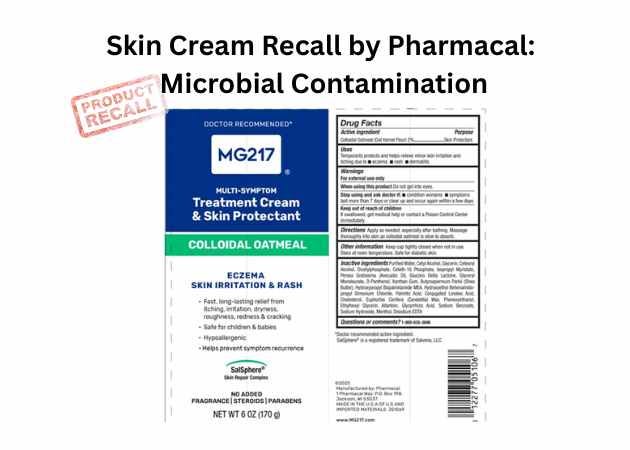
Pharmacal is recalling an over-the-counter skin cream, MG217 Multi-symptom Treatment Cream & Skin Protectant (Colloidal Oatmeal), due to contamination with the bacteria Staphylococcus aureus. Using the product could cause severe or life-threatening reactions. The recalled topical cream treats skin irritation, dryness, and redness, and comes in a 6 ounce tube with product code 5106 and UPC 012277051067. It was distributed nationwide to wholesale, retail (HE BUTT Grocery), and internet distributors (Amazon). Pharmacal says it has not received any reports of adverse events related to this recall. FDA Press Release:
”Pharmacal Issues Nationwide Recall of MG217 Multi-Symptom Treatment Cream & Skin Protectant Eczema Cream Due to Microbial Contamination”
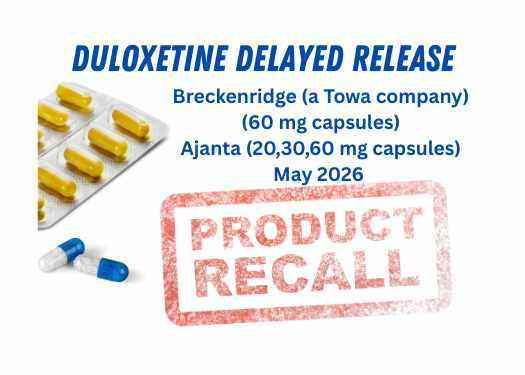
Duloxetine Delayed Release Capsules Recall by Breckenridge, Ajanta
Breckenridge Pharmaceutical is recalling 165,761 bottles of 60 mg capsules (90-count), due to the presence of nitrosamine impurities above the FDA-recommended limit. These capsules were made by Towa Pharma in Barcelona, Spain and distributed nationwide. Duloxetine is an antidepressant, generic for Cymbalta. The only lot number affected is 241069C with an expiration in May 2027.
FDA Enforcement Report
Read more about Nitrosamine Impurities (FDA information page)
Have you taken duloxetine (Cymbalta)? Read or add your reviews at Ask a Patient website, and if you used a generic, note that in the comments.
Ajanta is recalling more than 500,000 packs of 20, 30, and 60 mg capsules of Duloxetine delayed-release capsules, made in India, due to the presence of nitrosamine impurities (a cancer causing ingredient) above the FDA-recommended limit. The impurities were detected at long-term stability testing done at 12 or 18 months. The recalled capsules expire soon; in May or June 2026. Check the link for lot numbers.
FDA Enforcement Report (Ajanta/JB recall)
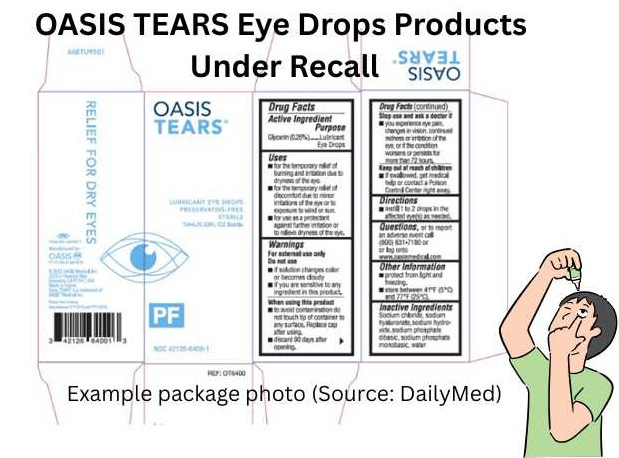
Eye Drops Recalls by Oasis and FreshKote
Oasis Medical is recalling an unspecified quantity of Oasis Tears PF, Preservative-Free Lubricant Eye Drops out of an abundance of caution after quality deficiencies were identified during a routine FDA inspection of the manufacturer Excelvision. The product is in a 10mL/0.34 Fl Oz bottle, and is made in France.
Oasis Tears Enforcement report
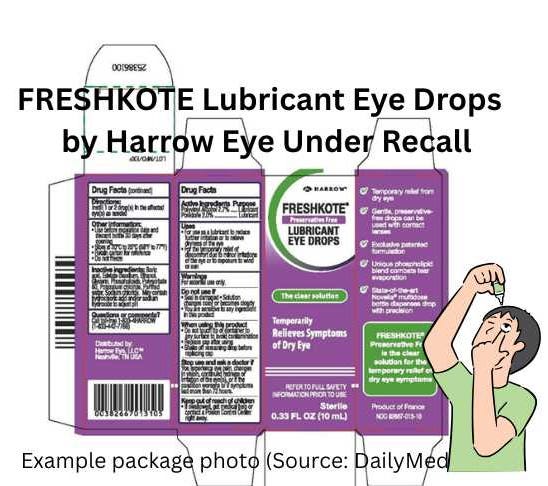
Harrow Eye, LLC is recalling 50,900 units of Freshkote eye lubricating drops (.33 fl ounce/10 mL), made in France, due to lack of assurance of sterility.
Freshkote Eye Drops Enforcement Report
Ocrevus Now Approved for Pediatric MS
Genentech’s Ocrevus (ocrelizumab) received expanded approval for treating relapsing-remitting multiple sclerosis (MS) in pediatric patients 10 years and older who weigh 25kilograms (55 pounds) or more. Previously, it was only approved for adults with MS.
It is rare for a child to have MS; only about 3-5% of people living with MS were diagnosed when they were under the age of 16; most are diagnosed in their 20s or 30s. After the first two doses administered two weeks apart, Ocrevus is administered intravenously (by IV) by a healthcare professional twice a year. Pediatric patients weighing 25 kg (55 pounds) to less than 35 kg (77 pounds) receive half the adult dose. Ocrevus was originally approved in 2017.
Multiple Sclerosis News Today: “FDA-approves-ocrevus-treating-children-10-older-relapsing-remitting MS” and FDA Supplemental Approval Letter for Ocrevus
Have you taken Ocrevus? Please add your rating or comments (no account or email needed) at Ask a Patient website.
Expanded Approval for Vyvgart for generalized Myasthenia Gravis (gMG)
Argenx BV’s Vyvgart (efgartigimod alfa-fcab) injection for intravenous use and Vyvgart Hytrulo (efgartigimod alfa and hyaluronidase-qvfc) injection for subcutaneous use received expanded approval for treating generalized myasthenia gravis (gMG) in adult patients. Previously, it was only approved for adults with a specific antibody requirement (anti-acetylcholine receptor antibody (AChR-Ab) seronegative). Vyvgart was originally approved in 2021.
Generalized Myasthenia gravis is a rare, chronic autoimmune neuromuscular disease that disrupts communication between nerves and muscles, leading to muscle weakness that can affect speaking swallowing breathing and limb strength; the symptoms often fluctuate.
Muscular Dystrophy Association: “FDA Expands-approval-of-vyvgart-and-vyvgart-hytrulo-to-all-adults-living-with-generalized-myasthenia”
FDA Approval Letter
Have you taken Vyvgart? Read comments from others or add your experience at Ask a Patient website.
Parkinson’s Disease Diagnostic DATSCAN Warning
GE Healthcare’s DATSCAN (ioflupane I 123 injection), is a radioactive diagnostic agent used to help diagnose suspected Parkinson’s disease (PD) or dementia with Lewy bodies. It uses single photon emission computed tomography (SPECT) equipment to visualize the presence and pattern of dopamine neurons, which helps to make a diagnosis or rule out a diagnosis, since levels of dopamine are reduced in Parkinson’s patients.
The antidepressants venlafaxine (Effexor brand name) and desvenlafaxine (Pristiq), which help preserve dopamine in the brain, may affect DATSCAN imaging interpretation. The label was updated to add the antidepressants to the interacting drug lists. DATSCAN was originally approved in 2011.
DATSCAN Label Update and Revised Drug Label
Also, three Attention Deficit Hyperactivity Disorder (ADHD) drug labels were recently updated to warn of their potential interaction with DATSCAN imaging interpretations. These ADHD stimulant drugs work by increasing levels of dopamine in the brain, improving motivation. All are DEA Schedule 2 drugs because they have a high potential for abuse: Adderall XR Label Update, Mydayis Label Update, and Vyvanse Label Update
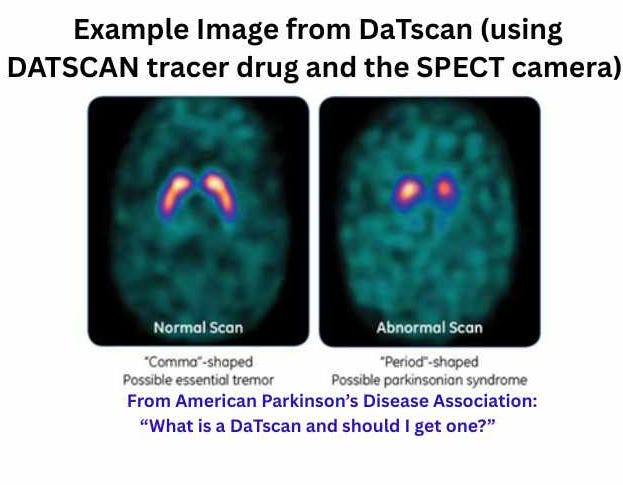
American Parkinson’s Disease Association: “What is a DaTscan and should I get one?”
The following medications should also be avoided before getting the imaging test: Amoxapine, amphetamine, armodafinil, benztropine, bupropion, buspirone, cocaine, mazindol, methamphetamine, methylphenidate, modafinil, norephedrine, phentermine, selegiline, sertraline, citalopram, paroxetine, venlafaxine, and desvenlafaxine. (listed on the DATSCAN label)
HHS Aims to Reduce Psychiatric Drug Prescribing
The U.S. Department of Health and Human Services (HHS) launched a new multi-agency program that aims to curb the overuse of psychiatric drugs and promote a more holistic approach to mental health. At the recent “Overmedicalization - Make America Healthy Again (MAHA)” event, panels of health care professionals, patients, mental health patient advocates, and government health officials provided testimony on such topics as prescription cascade, where adverse effects from one medication are often misinterpreted as new diagnoses, leading to the addition of more drugs.
Patients trying to stop taking their antidepressants shared that “rapid tapers” (short-term reduction in dosage amount) prescribed by health care providers have led to severe withdrawal effects, including having the withdrawal itself misidentified as a mental health relapse. The method of “hyperbolic tapering” (very gradual reduction in the dosage amount) was promoted by Dr. Mark Horowitz, a Clinical Research Fellow in Psychiatry who runs a deprescribing clinic in the UK. View his presentation (10 minutes long) or read the highlights, where he explains why this approach is safer:

Some have been critical of the HHS plan, saying that the most severe mental health conditions, such as schizophrenia, have been left out of the new initiative. Others point out that the paper released in conjunction with the initiative has some mistakes, including erroneous citations. The American Psychiatric Association (APA) released a statement that “while APA supports efforts to improve the quality, safety, and evidence base of mental health treatment, we strongly object to framing the nation’s mental health crisis as primarily a problem of ‘overmedicalization’ or ‘overprescribing.’ APA News Release
Substance Abuse and Mental Health Services Administration (SAMHSA): SAMHSA News Release on HHS Action Plan and “Dear Colleague” letter for clinicians
Drug Topics: HHS-Designs-Action-Plan-to-Address-Overprescribing-of-SSRIS
“Seeding” Clinical Trials’ Only Goal is to Increase Prescribing of Products
Researchers from University of California Santa Barbara and Cornell University analyzed over 34,000 industry-funded trials and found that hundreds of them were likely designed as “seeding trials,” a way to promote a drug to physicians rather than to collect scientific data. In a typical clinical trial, researchers recruit patients across clinics and hospitals to test whether a treatment is safe and effective. For a seeding trial, doctors may be selected to participate based on their prescribing volume rather than their research credentials.
Two prominent examples of seeding trials were Merck’s Advantage trial for the arthritis pain drug rofecoxib (Vioxx), which was later withdrawn from the market due to cardiovascular risks. Parke Davis’ STEPS trial in the late 1990s for epilepsy drug gabapentin (Neurontin) was designed to encourage doctors to write prescriptions for off-label use. Gabapentin is now the fifth most frequently prescribed generic drug in the country and still is only FDA-approved for partial onset seizures due to epilepsy and nerve pain caused by shingles. The study authors say that “these cases came to light only because litigation forced the release of internal company documents. Without that exposure, they would have remained indistinguishable from ordinary research.” Many more studies “are in the ambiguous middle ground, generating useful data while simultaneously serving promotional objectives.” The study was published in BMJ Evidence Based Medicine and is a feature article this month in “The Conversation.”
The Conversation: Clinical trials-that-are-actually-marketing-ploys: Targeting-doctors-how-seeding-trials-put-profit-over-patients
Have you taken gabapentin off-label? Read comments from others or easily add your experience (no account or email required) at Ask a Patient website.
Problems with AI in Medicine
Also: What Doctors Want to Know Most About Your Chest Pain
In a recent article, cardiologist and newsletter writer Dr. Gregory Katz talks about why he thinks A.I. in medicine is solving the wrong problems. For example, the “AI Scribe” tool does not work very well in his experience. It writes too much verbatim detail and sometimes adds wrong information, such as including notes about the doctor himself in the patient’s health history if the common phrase “how are you doing” (directed to the doctor) comes up during conversation. (Patients should always have an opportunity to opt-out of having their medical consultations documented with an automatic AI scribe.)
Katz observes that AI chatbots can answer questions, but do not ask the right ones. “Patients are often ineffective narrators about things that matter for diagnostic purposes…It’s not a patient’s job to know what details about chest pain matter.” To illustrate this, he references his article from last August “Why your doctor keeps interrupting you (and how to fix it).”
Many patients tend to focus on chest pain severity or the specific way it feels, such as being stabbing, crushing, dull, or burning. Dr. Katz explains that those pain descriptions are not as important as the pattern, the timing, and circumstances that make the pain better or worse. Answers to the following are the most important:
· Does it come on with activity or go away with rest?
· Is it worse when you breathe in?
· Is it worse lying down or sitting up?
· How long does it last?
· What have you tried to make it better or worse?
Some symptoms, such as shortness of breath while lying down, are red flags. Read the full story for more:


Did you miss the last edition of the newsletter? Read it here:
