

July 2026: Huge Cetirizine, Amlodipine, Nystatin, Eye Drops Recalls; Pediatric Approvals; Eye Drops Tips; New Cholesterol Treatment; Blood Test News
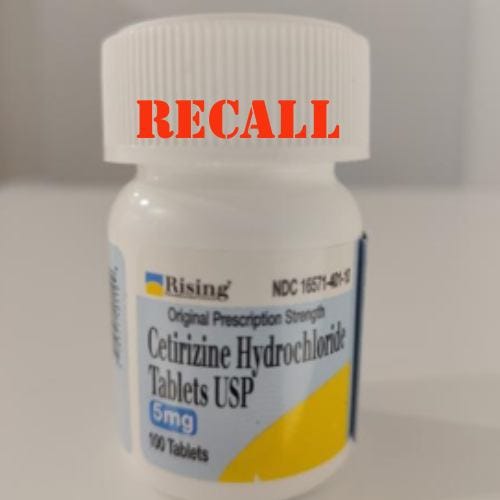
Rising Pharma Cetirizine (Zyrtec generic) Recall Due to Cross-Contamination
Unique Pharmaceutical Laboratories (a Division of J. B. Chemicals & Pharmaceuticals Ltd.) is recalling 34,000 bottles (100-count) of 5 mg Cetirizine Hydrochloride Tablets (generic for allergy treatment Zyrtec) due to potential cross contamination with Ranitidine, which was formerly available as an over-the-counter treatment for stomach acid or heartburn (Zantac) but is now a prescription-only formulation.
The FDA warns that “for consumers with a hypersensitivity to the ingredients in ranitidine, there is a reasonable probability that ingestion of Cetirizine tablets contaminated with ranitidine could result in serious adverse events including severe hypersensitivity reactions and anaphylaxis that manifests as hypotension, dyspnea, difficulty swallowing, throat and facial edema, generalized pruritic, urticaria, and loss of consciousness, which are all life-threatening.” All of the products in the four recalled lots expire in October 2028. This product was made by Unique Pharmaceuticals in Mumbai, India and sold at many retail stores and online retailers.
FDA Press Release: Rising Pharma Cetirizine Recalled Due to Possible Cross Contamination with Ranitidine
(Update: On August 3, 2026, FDA classified this as a “CLASS I” level recall, the most serious kind of recall.)
Note that ranitidine products were recalled in 2020 due to cancer-causing impurities. The ingredient, in a new prescription-only formulation, was approved in November 2025.
FDA Enforcement Report: Cetirizine
Amlodipine Olmesartan Medoxomil Tablets Recall by Ascend
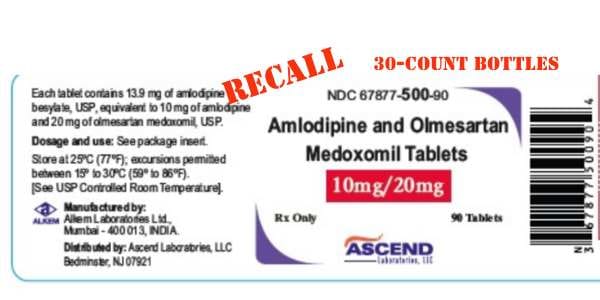
Ascend Laboratories is recalling 6,192 bottles (30-count) of Amlodipine and Olmesartan Medoxomil Tablets, 10 mg/20 mg because of “failed dissolution specifications,” with the amount of Olmesartan found to be “below specifications” when dissolved, which might make the medication less effective.
Amlodipine is a calcium channel blocker and Olmesartan is an ARB (angiotensin 2 receptor blocker); this combination medication for high blood pressure is a generic of Azor brand name. The drug was made by Alkem Laboratories Ltd in Mumbai, India. These tablets expire in March 2028. This recall is related to a larger event announced in June that involved 15,696 bottles of the 5mg/40mg formulation of the drug.
FDA Enforcement Report
Levothyroxine Tablets Recall by Major Pharmaceuticals
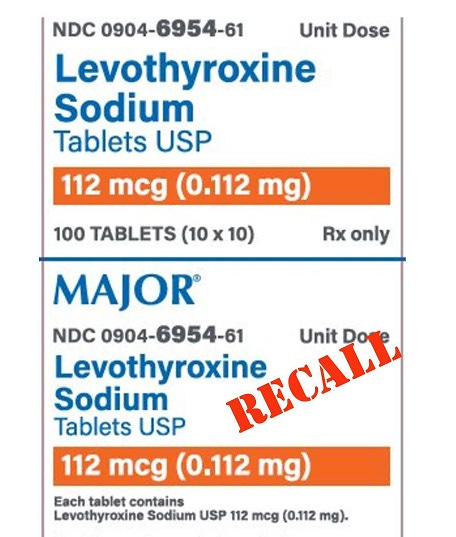
Major Pharmaceuticals is recalling 12 different strengths of hypothyroidism (underactive thyroid) treatment Levothyroxine Sodium tablets (generic for Synthroid) because they contain less than the labeled amount of levothyroxine. The tablets are in 10X10 or 10x1 blister packs and the labeled strengths are between 25 mcg and 150 mcg. Expiration dates are between July 2026 and January 2027.
Patients being treated for hypothyroidism who receive subpotent medication may experience symptoms of hypothyroidism like fatigue, increased sensitivity to cold, constipation, dry skin, puffy face, hair loss, slow heart rate, depression, swelling of the thyroid gland and/or unexplained weight gain or difficulty losing weight. Check this Enforcement Report link for the complete list of levothyroxine products.
FDA Enforcement Report
Nystatin Antifungal Cream Recall by Padagis
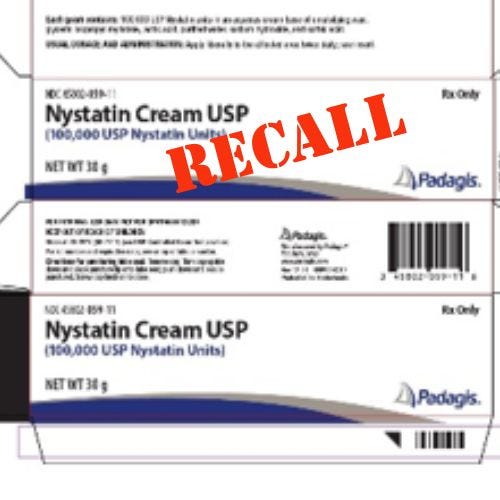
Padagis US is recalling 180,936 tubes of 15g Nystatin topical cream because the drug was subpotent (had less than the required amount of active ingredient) during long-term stability testing. The medicine might lose its effectiveness over time. The prescription medication is used to treat fungal and yeast infections on the skin. The recalled product was manufactured by Padagis in Yeruham, Israel.
FDA Enforcement Report
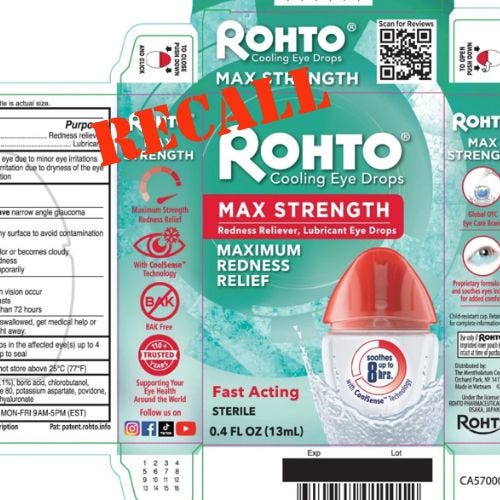
More Than 8 Million Cartons of Rohto Cooling Eye Drops Recalled by Mentholatum
This is an enormous recall: Rohto-Mentholatum (Vietnam) Co. is recalling more than 8 million cartons of eight of its Rohto brand eye drops due to a lack of assurance of sterility. The products include Rohto Cooling Eye Drops Dry Aid, Rohto Cooling Eye Drops Dry Aid Twin Pack, Rohto Cooling Eye Drops ALL-IN-ONE, Rohto Cooling Eye Drops Max Strength, Rohto Cooling Eye Drops Max Strength Twin Pack, Rohto Cooling Eye Drops Optic Glow, Rohto Cooling Eye Drops Digi Eye, Rohto Cooling Eye Drops Cool Relief.
These drops were ma in Vietnam by Rohto-Mentholatum (Vietnam) and sold as over-the-counter eye redness relief and lubricant drops at various retail outlets.
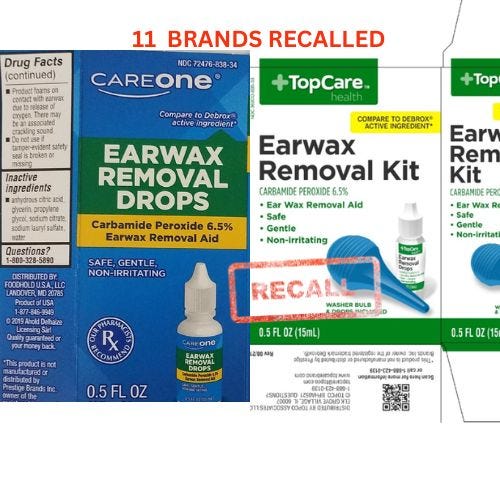
11 Store Brand and Private Label Carbamide Peroxide (Earwax Removal Drops) Recall
Bell Pharmaceuticals is recalling more than 300,000 earwax removal bottles and kits for 11 different private label brands including Audiologist’s Choice, CVS, Meijer, TopCare Health, Foster & Thrive, and CareOne because they were found to be subpotent, containing only 0.6% of Carbamide Peroxide, which is less than 1/10 of the labeled amount of 6.5%. The private labels are generic versions of brand name Debrox. Check this Enforcement Report link for the complete list of products, most of which expire in April 2027.
FDA Enforcement Report
New and Expanded Drug Approvals
Lung Cancer Treatment
Nuvalent’s Jideytro (zidesamtinib) tablets were approved by the FDA to treat locally advanced or metastatic ROS1-positive non-small cell lung cancer (NSCLC) who received at least one prior ROS1 tyrosine kinase inhibitor (TKI). Recently, Nuvalent was acquired by GSK. According to GSK, about 50,000 new cases of ROS1-positive NSCLC are diagnosed each year worldwide, mostly among non-smokers in their 40s and 50s who could stay on treatment for several years.
FDA Press Release: FDA-approves-zidesamtinib-ros1-positive-non-small-cell-lung-cancer
Fierce Pharma: GSK-secures-first-ever-lung-cancer-fda-approval-jideytro-nuvalent-deal
Cholesterol Drug Approved
Patients now have a pill option for a PCSK9-inhibitor LDL cholesterol-lowering drug. Previously, only “large molecule” PCSK9-inhibitor injectables like Repatha or Praluent were available in this treatment category. In February, Merck was granted a “national priority voucher” for a faster review time of its enlicitide decanoate tablets. PCSK9 is a protein that limits the liver’s ability to remove bad cholesterol from the blood.
FDA Approval Announcement
Read more about the different types of cholesterol-lowering medications, including PCSK9 inhibitors, at Medline Plus.
Expanded Approval: Skyrizi Approved for Children Age 6 and Up with Moderate to Severe Psoriasis or Psoriatic Arthritis
Abbvie’s Skyrizi (risankizumab-rzaa) injection received FDA approval for children age 6 and Up with moderate to severe psoriasis or psoriatic arthritis. A new 55mg prefilled syringe for patients weighing less than 40kg will be available. Psoriatic arthritis in children is rare, and according to a study published in Dermatology and Therapy on prevalence of the disease in children, cases of severe or moderate psoriasis are also uncommon, with an estimated 18.4 cases per 100,000 adolescents in the U.S.
Medical Professionals Reference: Skyrizi Earns FDA Pediatric Approval for Psoriatic Disease in Patients Age 6+
Read more about the autoimmune skin condition psoriasis at Medline Plus
Dermatology and Therapy: Prevalence and Trends in Systemic Treatment for Pediatric Psoriasis in the USA between 2015 and 2021
Expanded Approval: Ryaltris Nasal Spray for Allergies Approved for Children Age 6 and Up
Glenmark’s Ryaltris (olopatadine hydrochloride, an antihistamine, and mometasone furoate, a corticosteroid) nasal spray received expanded approval to treat children age 6 and up with seasonal allergies Before, it was approved only for age 12 and up. A short-term two week study was used as the basis for approval, with the younger children experiencing similar side effects to the age 12 and up group.
A concerning side effect to be aware of for this group is the risk of the drug’s effect on growth. The label warns that “nasal corticosteroids, including RYALTRIS, may cause reduction in growth velocity when administered to pediatric patients.”
Healio: “FDA Expands Ryaltris Approval to Include Children Age 6 to 11”
Strattera (Atomoxetine Hydrochloride) Label Update
Lilly updated the drug label for its non-stimulant ADHD (Attention-Deficit Hyperactivity Disorder) drug Strattera (atomoxetine hydrochloride) to clarify the boxed warning, age indications and dosages, and make formatting changes to the label. Find out more about this drug, risks that are being studied, and a questioning of why the boxed warning never included adults.
Strattera (Atomoxetine) Revised Label, More Clarity, But is a Warning Still Missing?

Eli Lilly recently revised the label for its non-stimulant ADHD (Attention-Deficit Hyperactivity Disorder) drug Strattera (atomoxetine hydrochloride) to clarify the boxed warning and age indications and to make other required formatting changes. If you’re taking generic Strattera, or atomoxetine capsules, no need to worry about newly discovered side eff…
Blood Testing for Alzheimer’s Biomarkers
A new blood test can tell if your blood contains biomarkers (phosphorylated tau 217, or p-tau217) that can predict the risk of developing dementia. Here are three insights on this new test:
Dr. Lucy McBride, writer of “Are You Okay?” answered a question from her 60-something patient who said she didn’t have memory issues “beyond the usual fog of a woman juggling a job, a family, and her mother’s care at once” but wants to know if she should get the test. An underlying concern is that her mother has Alzheimer’s.
Check out Dr. McBride’s explanation of amyloid proteins (which build up outside of brain cells) and tau (which build up inside of the brain cells). Most importantly, she explains why you don’t need a p-tau test to alter the course of your brain health:

The People’s Pharmacy’s Joe Graedon explains that extensive amyloid plaques in the brain have been found in people without cognitive decline symptoms. Also, a recent study published in JAMA found that “even among people with very high p-tau217, approximately 62 percent did not progress to cognitive impairment during the five-year period. Conversely, even the low p-tau217 group had a 12 percent risk of cognitive decline. That tells us that p-tau217 is detecting something important but is not telling the whole story.”
The People’s Pharmacy: “The New Alzheimer Biomarker Versus Nuns who Defied Dementia”
Also, just posted today, is The Skeptical Cardiologist’s experience with the test:

Medication Tips: Over-the-Counter Eye Drops
With at least eight eye drop recalls announced this year, consumers are rightly concerned about the safety of eye drops used for allergies, dry eye, red eyes, or any other reason. Preservative-free products are more likely to be recalled, but drops containing preservatives like Polyquad (ammonia based) or purite (chlorite) can be irritating. Most prescription eye drops and some over-the-counter drops include Benzalkonium chloride (BAK), which is known to cause adverse effects such as ocular surface disease with long term use.
The American Academy of Ophthalmology (AAO) recommends that if you’re using the eye drops only occasionally, then a preserved drop is likely safe. But if you’re lubricating your eyes more than four times a day over a long period of time, a preservative-free drop is recommended. AAO also recommends using artificial tears during the day and lubricating gels, which can cause temporary blurry vision, at night.
Check here for more eye drops tips:
American Academy of Ophthalmology: “Eye Health: How to Choose the Best Lubricant Drops for Dry Eyes”
Glaucoma Foundation: “Doctor-I-have-a-question-ive-been-hearing-more-about-the-need-for-preservative-free-glaucoma-eye-drops-why-is-this-need-increasing/”
Did you miss the last edition? Check it out here:

Stop listening to fucking quacks!
https://ankinlaw.com/do-doctors-kill-more-than-guns/
Thank you!