

Pet Medication News: Recent Drug Approvals for Idiopathic Epilepsy and Lymphoma in Dogs; Minoxidil Warning; Largest-Ever Clinical Trial of Dogs Investigates Lifespan-Extending Treatment
Special Post About Pet Medications
New Drug Treats Idiopathic Epilepsy in Dogs
The FDA Center for Veterinary Medicine granted full approval to Pegasus Laboratories’ KBroVet (potassium bromide chewable tablets), a prescription treatment for the control of seizures in dogs with idiopathic epilepsy, or recurring seizures with no known cause. Pegasus’ KBroVet website notes that idiopathic epilepsy is the most common chronic neurologic disorder in dogs. Dog owners must work closely with their veterinarians to monitor clinical signs of bromide intoxication, which can happen when high levels of bromide overwhelm the nervous system. The medication, which is taken daily, has been available under conditional approval since 2021.
FDA Press Release: FDA Grants Full Approval for Drug to Control Seizures in Dogs With Idiopathic Epilepsy
Drug Information for KBroVet The 15-page guide posted at the FDA website provides supporting clinical data, dosage instructions, and more.
While any dog breed can develop idiopathic epilepsy, Schnauzers, Collies, Basset Hounds, Cocker Spaniels, Labrador Retrievers, and Golden Retrievers are diagnosed more frequently. Read more about idiopathic epilepsy in dogs at Whole Dog Journal: “Managing Idiopathic Epilepsy”
New Drug Treats Lymphoma in Dogs
The FDA Center for Veterinary Medicine granted full approval for Anivive Lifesciences’ Laverdia (verdinexor) tablets to treat dogs with lymphoma, a type of cancer of the lymph nodes and lymphatic system. Laverdia prevents certain proteins from leaving the nucleus of cancer cells, thereby allowing these proteins to control the growth and prevent the spread of cancerous cells in dogs. The medication has been available under conditional approval since 2021. Owners of dogs with lymphoma administer Laverdia orally while at home, following a veterinarian prescription and the safety directions detailed in the product’s client information sheet. Laverdia is given twice per week immediately after eating, with at least 72 hours between doses. The most common adverse effects are anorexia, weight loss, vomiting, diarrhea, and lethargy.
Medical gloves safe for use with chemotherapy drugs should always be worn when handling Laverdia and when cleaning up after a dog undergoing treatment and for three days following the last treatment. The FDA states that canine lymphoma affects fewer than 80,000 dogs in the U.S. each year.
FDA Press Release: FDA Grants Full Approval of First Oral Treatment for Lymphoma in Dogs
Minoxidil Warning for Pet Owners
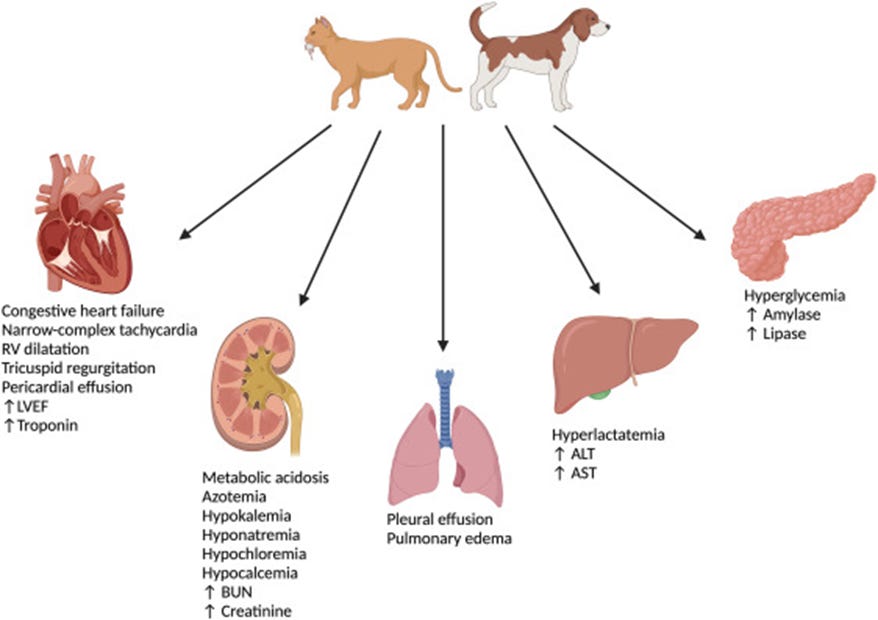
If you have a dog or cat and also use minoxidil (including Rogaine brand name) as a hair loss treatment, be careful not to let your pets ingest the medication or come in contact with surfaces that may have been exposed, such as skin, towels, clothes, and bedding. The FDA recently posted updates to minoxidil labels to include a new pet-related warning after recent research has shown a link between minoxidil and toxicosis, with about 14% of hospitalized cats dying from the exposure
A medical literature review study led by Department of Dermatology and Skin Science, University of British Columbia, Vancouver was published in The Journal of the American Academy of Dermatology in August 2025: “Minoxidil toxicosis in cats and dogs: A scoping review and call to action.”
The study notes that symptoms, which include poor feeding and shortness of breath, may set in as early 30 minutes after exposure. Treatments mentioned in the study included supplemental oxygen, warming pads, intravenous fluids, diuretics, vasopressors, thoracocentesis (procedure to remove fluid or air from around the lungs), and beta blockers.
Longevity Pill for Dogs: Huge Clinical Trial to Begin
Veterinary drug research company Loyal announced that the FDA’s Center for Veterinary Medicine has accepted the Target Animal Safety (TAS) section of its “Expanded Conditional Approval” application for LOY-002, an investigational medication that aims to extend the lifespan of dogs. There are three components to the FDA’s “Expanded Conditional Approval (XCA)” process, and so far Loyal says it has met two of them: safety and efficacy.
Now it is working on the manufacturing component and beginning a clinical trial (called the STAY study) necessary for eventual full approval of LOY-002. Loyal says that the medication works by addressing the “metabolic dysfunction that all dogs experience as they age, delaying the start of many diseases that reduce quality of life for senior dogs.” So far, effectiveness data has not been released.
The STAY study is a double-blinded, four-year long placebo-controlled study with 1,300 dogs enrolled across 70 veterinary clinics nationwide. According to Forbes, this is the largest animal clinical trial ever conducted. LOY-002 is administered orally and is intended for dogs age 10 or older weighing at least 14 pounds. Loyal is also working on a separate injectable drug for very large dogs.
Loyal Press Release: One step closer to a longevity drug: LOY-002 hits key FDA milestone
Forbes: A Longer Leash on Life: Inside the Dog Longevity Startup Loyal
Profiles the founder of Loyal, 30-year-olld Celine Halioua who has raised more than $135 million in equity and has for years been focused on finding a marketable drug to improve longevity in dogs.
Other Longevity Research: Whole Dog Journal: “Rapamycin: the new anti-aging pill for dogs?”
Thank you for reading this special post about pet medications. Would you like to read more about pet medications news in the future? Please comment or click the “like” button on this page.